Best Sales Intelligence Tools Compared (2026)

Best Sales Intelligence Tools Compared (2026)
Sales intelligence tools promise to tell you everything about your prospects before you ever pick up the phone. The reality? Most teams pay $15K+ per year and still end up Googling their prospects five minutes before a call.
TL;DR: The best sales intelligence tool depends on your team size and budget. For enterprise teams, ZoomInfo and 6sense offer the deepest data. For mid-market, Cognism and Apollo deliver strong value. For flexible, build-your-own intelligence, Clay connects 100+ data sources in one workflow. For free research, start with Revenue Finder and the Prospect Research skill.
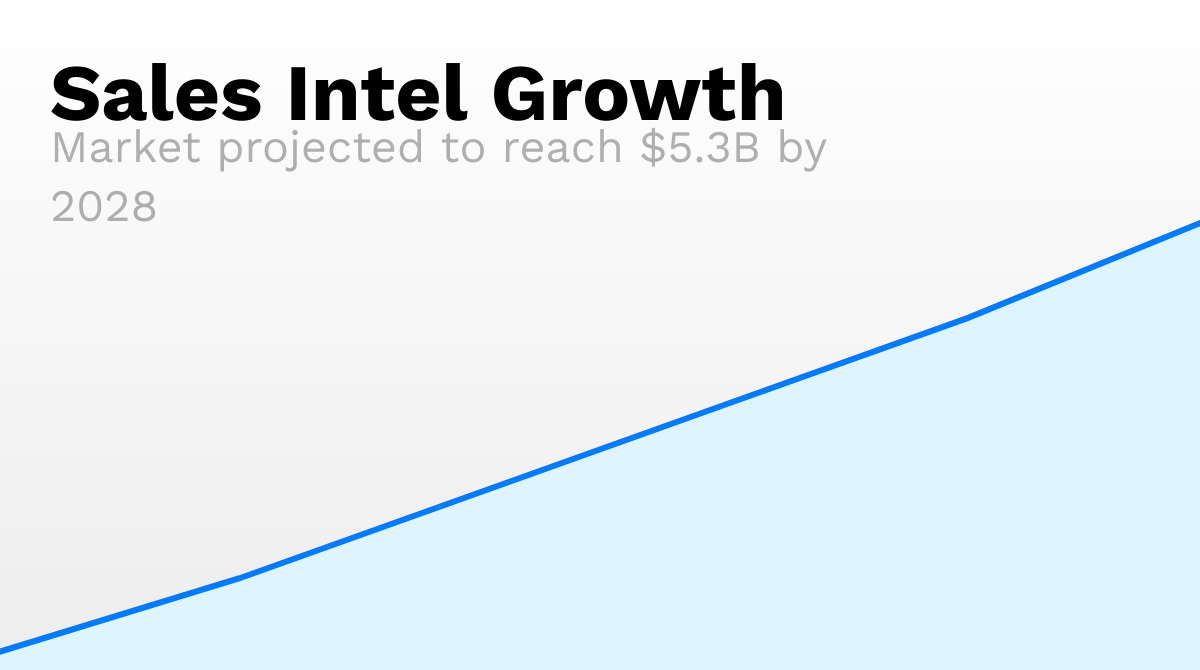
The global sales intelligence market was valued at $4.40 billion in 2024 and is projected to reach $10.25 billion by 2032, growing at 11.3% CAGR (Fortune Business Insights, 2025). That growth reflects a simple truth: the teams with better data close more deals.
This guide compares the tools that actually matter, with real pricing, honest pros and cons, and a framework for choosing based on your situation.
What Makes a Sales Intelligence Tool Worth Paying For?
Before we compare platforms, let's define what separates a real sales intelligence tool from a glorified contact database.
A complete sales intelligence platform should deliver:
- Contact data with verified emails and direct dials
- Company data including firmographics, technographics, and org charts
- Buying signals like job changes, funding rounds, and technology adoption
- Intent data showing which accounts are actively researching your category
- Workflow integration that pushes intelligence into your CRM and sequences
Most tools do 2-3 of these well. None do all five perfectly. The art is matching your biggest gap to the tool that fills it best.
Quick Comparison: Top Sales Intelligence Tools
| Tool | Best For | Data Strength | Starting Price |
|---|---|---|---|
| ZoomInfo | Enterprise data at scale | Contact + intent + firmographic | ~$15K/year |
| 6sense | Account-based intent | Intent + predictive analytics | ~$50K/year |
| Cognism | European B2B data | GDPR-compliant contacts | ~$1,000/mo |
| Apollo | Affordable all-in-one | Contact + engagement | Free / $49/user/mo |
| Clay | Custom intelligence workflows | 100+ data sources | Free / $149/mo |
| LinkedIn Sales Navigator | Relationship intelligence | Social + network data | $99/user/mo |
| Clearbit (HubSpot) | Real-time enrichment | Firmographic + technographic | Included with HubSpot |
| Dealfront | European market focus | Web visitor + intent | ~€199/mo |
| Lusha | Quick contact lookups | Direct dials + emails | Free / $49/user/mo |
| Revenue Finder | Free revenue estimates | Company revenue data | Free |
The 10 Best Sales Intelligence Tools
1. ZoomInfo
💰 Pricing: Annual contracts starting around $15,000/year. Enterprise packages run $25,000-60,000+ depending on features, seats, and credits.
ZoomInfo is the largest B2B data platform and the default choice for enterprise sales teams. Its database covers 100M+ business contacts and 14M+ companies, with data quality that consistently ranks among the highest in independent tests.
What sets ZoomInfo apart from smaller players is depth. You get verified contact data, real-time buying signals (Scoops), org charts, technographic data, website visitor tracking, and intent data, all in one platform. Their conversation intelligence (via Chorus acquisition) adds another layer, analyzing sales calls for competitive mentions and objection patterns.
On G2, ZoomInfo holds a 4.5/5 rating across 8,500+ reviews, making it the most-reviewed platform in the sales intelligence category.
- Largest and most accurate B2B database
- Comprehensive feature set (contacts, intent, technographics, org charts)
- Real-time buying signals via Scoops
- Strong CRM and sales tool integrations
- Conversation intelligence via Chorus
- Expensive with aggressive annual contracts
- Renewal price increases are a common complaint on G2
- Credit-based system limits usage
- Data quality outside North America is weaker
- Overkill for small teams
Best for: Enterprise sales teams (50+ reps) that need a single platform for prospecting, enrichment, and intent data. See the full ZoomInfo alternatives breakdown for a deeper look.
2. 6sense
💰 Pricing: Custom pricing, typically $50,000-130,000/year. Limited free tier with 50 prospecting credits.
6sense takes a fundamentally different approach to sales intelligence. Instead of starting with contacts, it starts with accounts. The platform uses AI to predict which accounts are in-market, what stage of the buying journey they're in, and which competitors they're evaluating.
For ABM-driven organizations, this is transformative. Instead of reps cold-calling into a list, they can focus on the accounts that are actively researching solutions right now. 6sense claims their customers see 2x pipeline creation and 35% higher win rates when using intent-driven prioritization.
The catch? It requires a real investment in both money and implementation. Most companies need 2-3 months to get fully set up, and you need RevOps support to tune the predictive models.
- Best-in-class account-level intent data
- Predictive analytics identify accounts before they fill out forms
- Shows which competitors accounts are evaluating
- Integrates deeply with Salesforce and HubSpot
- Dynamic audience building for advertising
- Expensive minimum annual commitment
- Complex implementation (2-3 months typical)
- Intent accuracy varies by industry
- Requires RevOps to get full value
- Contact data quality trails ZoomInfo
Best for: B2B companies running account-based strategies with $50K+ annual budget for sales intelligence. Learn more about intent data in our complete intent data guide.
3. Cognism
💰 Pricing: Custom pricing, typically starting around $1,000/month. Annual contracts required.
Cognism has carved out a strong position as the go-to sales intelligence platform for teams selling into European markets. Their database is GDPR-compliant by design, with phone-verified mobile numbers ("Diamond Data") that consistently outperform competitors in connect rates.
Cognism also integrates Bombora intent data directly into its platform, so you can filter prospects by both data quality and buying intent. Their Chrome extension works across LinkedIn and company websites for quick prospecting.
On G2, Cognism scores 4.6/5 with particularly strong reviews from European customers.
- Best GDPR-compliant B2B data for European markets
- Phone-verified mobile numbers (Diamond Data)
- Bombora intent data integration included
- Strong Chrome extension for LinkedIn prospecting
- Clean, intuitive interface
- North American data quality trails ZoomInfo
- No free tier
- Annual contracts only
- Smaller database than ZoomInfo or Apollo
- Limited technographic data
Best for: Sales teams targeting European markets where GDPR compliance and phone-verified data quality matter most.
4. Apollo.io
💰 Pricing: Free plan with limited credits. Basic at $49/user/month. Professional at $79/user/month. Organization at $119/user/month.
Apollo is the best value in sales intelligence right now. With 275M+ contacts and a generous free tier, it offers data quality that competes with tools 10x its price. The platform combines contact data, engagement tools (email sequences, dialer), and buying signals in a single interface.
Apollo has improved significantly in the past year. Their data accuracy, once a weak spot, now scores competitively with Cognism on independent tests. The addition of AI-powered features like auto-generated email drafts and deal intelligence makes it a genuine all-in-one platform.
G2 gives Apollo 4.8/5 across 7,200+ reviews, the highest-rated platform in the category.
Watch: Building an outbound engine using sales intelligence data
- 275M+ contacts with improving data accuracy
- Generous free tier for testing
- All-in-one: data + sequences + dialer
- Competitive pricing vs ZoomInfo
- Strong LinkedIn integration
- Data quality inconsistent outside North America
- Email deliverability features trail dedicated tools
- Credit limits can be restrictive at scale
- Less depth on intent data than 6sense or ZoomInfo
- Support quality varies by plan tier
Best for: SMB and mid-market teams that want an affordable all-in-one platform. Compare pricing in the Apollo pricing breakdown.
5. Clay
💰 Pricing: Free plan to test. Starter at $149/month. Explorer at $349/month. Pro at $800/month. All credit-based.
Clay isn't a traditional sales intelligence tool. It's a data orchestration platform that lets you build any intelligence workflow by connecting 100+ data providers in a spreadsheet-like interface. Think of it as a programmable layer on top of every data source.
Why does this matter? Because no single data provider has everything. Clay lets you waterfall across ZoomInfo, Apollo, Clearbit, and dozens of other providers to maximize coverage. When one source misses, the next one picks it up. Add Claygent (their AI research agent) and you can run custom research tasks at scale, things like "find the VP of Sales at companies using Salesforce with 50-200 employees that just raised funding."
For sales teams that have outgrown simple lookup tools and need flexible, multi-source intelligence pipelines, Clay is the power tool.
Watch: Building custom sales intelligence pipelines in Clay
- Connect 100+ data sources in one workflow
- Waterfall enrichment maximizes data coverage
- AI research agent (Claygent) for custom research
- Far more flexible than any single-source tool
- Build once, run at scale
- Learning curve for complex workflows
- Not plug-and-play like Apollo or ZoomInfo
- Credits from underlying providers add up
- No built-in engagement features (sequences, dialer)
- Requires some technical thinking
Best for: GTM teams that need multi-source intelligence and custom research workflows. Learn the fundamentals in the Clay tutorial or go deep with the Clay guide.
6. LinkedIn Sales Navigator
💰 Pricing: Core at $99/user/month. Advanced at $149/user/month. Advanced Plus with CRM sync at $169/user/month.
LinkedIn Sales Navigator offers something no other tool can: intelligence from the world's largest professional network. With 1B+ members, LinkedIn has real-time data on job changes, promotions, company updates, and relationship connections that third-party databases can only approximate.
Sales Navigator's strength is relationship intelligence. Who at your target account shares connections with your team? Who just got promoted to a decision-making role? Which accounts are engaging with content in your industry? These social signals complement the firmographic data from other tools.
The limitation is that LinkedIn data stays in LinkedIn. Exporting is restricted, and the platform works best as part of a broader stack rather than your sole intelligence tool.
- First-party data from 1B+ professionals
- Real-time job change and promotion alerts
- Relationship mapping shows warm paths into accounts
- InMail for direct outreach
- Deep account and lead filtering
- Data stays locked in LinkedIn's ecosystem
- No email addresses or direct phone numbers
- Limited export capabilities
- Per-seat pricing gets expensive for large teams
- InMail response rates have declined
7. Clearbit (now part of HubSpot)
💰 Pricing: Included with HubSpot (Marketing Hub Professional+). Standalone access no longer available for new customers.
Clearbit was one of the original modern sales intelligence tools, known for real-time enrichment APIs that populate CRM records the moment a lead enters your system. After HubSpot acquired Clearbit in late 2023, the technology has been integrated directly into HubSpot's platform.
For HubSpot customers, this is a significant upgrade. Every contact and company record gets automatically enriched with firmographic, technographic, and employee data. The real-time nature means your CRM data stays current without manual effort.
- Seamless HubSpot integration
- Real-time enrichment (no batch processing)
- Strong firmographic and technographic data
- Included with HubSpot subscription
- Clean API for custom integrations
- Now HubSpot-only for new customers
- Contact data (emails, phones) trails ZoomInfo and Apollo
- No standalone purchase option
- Limited intent data
- US-centric data coverage
Best for: HubSpot users who want automatic CRM enrichment without adding another tool to the stack.
8. Dealfront
💰 Pricing: Target (prospecting) from €199/month. Leadfeeder (web visitors) from €99/month. Combined packages available.
Dealfront was formed by the merger of Leadfeeder and Echobot, creating a European-focused sales intelligence platform. It combines web visitor identification (which companies are visiting your site) with B2B prospecting data and intent signals from European markets.
Dealfront's edge is its European data depth. While ZoomInfo and Apollo focus primarily on North American markets, Dealfront covers DACH, Nordics, Benelux, and other European regions with better accuracy. Their GDPR compliance is built in from the ground up.
- Best-in-class European B2B data
- Website visitor identification (Leadfeeder)
- GDPR-compliant by design
- Intent signals from European web activity
- Good CRM integrations
- Limited North American data
- Smaller overall database than global competitors
- Two products (Target + Leadfeeder) can feel disjointed
- Less known outside Europe
- Pricing adds up when combining both products
Best for: European B2B companies that need GDPR-compliant prospecting data and website visitor identification.
9. Lusha
💰 Pricing: Free plan with 50 credits/month. Pro at $49/user/month. Premium at $79/user/month.
Lusha focuses on what many sellers need most: fast access to verified contact data. Their Chrome extension sits on top of LinkedIn and company websites, providing direct dials and email addresses with a single click. No complex workflows, no enterprise contracts.
Lusha's data quality on direct phone numbers is particularly strong. In independent tests, their direct dial accuracy regularly outperforms larger platforms, which makes sense given that Lusha crowdsources verification from its 1.5M+ user community.
- Fast, simple contact lookups via Chrome extension
- Strong direct dial accuracy
- Generous free tier (50 credits/month)
- Simple pricing without enterprise contracts
- Good Salesforce and HubSpot integrations
- Limited to contact data (no intent, limited firmographics)
- Credits get consumed quickly at scale
- Less depth than full platforms like ZoomInfo
- No built-in engagement tools
- Company data trails dedicated platforms
Best for: Individual sellers and small teams that need quick, accurate contact data without complex platforms.
10. Revenue Finder (Free)
💰 Pricing: Completely free. No account needed.
Revenue Finder is a free tool that provides instant revenue estimates for any company. When you need to quickly qualify whether a prospect is in your ICP, check a competitor's scale, or prioritize accounts by revenue, it delivers in seconds.
Pair it with Employee Finder for headcount data and Website Finder for company domains to build a basic intelligence profile without spending a dollar.
Watch: How to research prospects and companies at scale
- Free, no signup required
- Instant revenue estimates
- Great for quick qualification
- Works for any company
- Estimates only (not verified financials)
- Revenue data only (not a full intelligence platform)
- Best for private companies without public financials
Best for: Anyone who needs quick revenue intelligence for prospecting, qualification, or competitive research.
How to Choose the Right Sales Intelligence Tool
By Team Size
Solo or 1-5 reps: Start with Apollo (free tier) + Revenue Finder + LinkedIn Sales Navigator. You get solid data coverage without enterprise pricing. Add Clay when you need multi-source workflows.
Mid-market (5-50 reps): Apollo or Cognism as your primary data source, depending on whether your market is US or Europe. Layer in Clay for research workflows and Sales Navigator for relationship intelligence.
Enterprise (50+ reps): ZoomInfo as the data backbone, 6sense for intent-driven prioritization, Gong for conversation intelligence. Consider Clay for teams that need custom workflows beyond what ZoomInfo provides.
By Budget
$0/month: Apollo free + Revenue Finder + Employee Finder + free AI skills like Prospect Research
$100-300/month: Apollo Professional ($79/user) or Lusha Pro ($49/user) + LinkedIn Sales Navigator ($99/user)
$500-1,500/month: Clay Explorer ($349) + Cognism or Apollo Professional for data
$15,000+/year: ZoomInfo or 6sense for enterprise-grade intelligence
By Primary Need
"I need contact data fast" → Lusha or Apollo. Chrome extension, quick lookups, no complexity.
"I need intent data to prioritize accounts" → 6sense or ZoomInfo with intent add-on. See our intent data guide for a deep dive.
"I need European B2B data" → Cognism or Dealfront. Purpose-built for GDPR-compliant European prospecting.
"I need flexible, multi-source intelligence" → Clay. Build custom workflows from 100+ providers.
"I need everything in one platform" → ZoomInfo for enterprise, Apollo for mid-market.
Sales Intelligence Tools vs. Data Enrichment Tools
People often confuse these two categories. Here's the difference:
Sales intelligence tools help you find and prioritize prospects. They answer: "Who should I sell to, and when should I reach out?"
Data enrichment tools fill in missing information on contacts you already have. They answer: "What do I know about the people already in my CRM?"
Many platforms blur the line. ZoomInfo and Apollo do both. Clay excels at enrichment workflows. Clearbit is primarily enrichment. For a deep dive on the enrichment side, read the B2B data enrichment guide and the best data enrichment tools comparison.
The Role of AI in Sales Intelligence
Every tool on this list has added AI features in the past year. Here's what actually works vs. what's marketing:
Actually useful:
- AI-generated prospect research summaries (Clay's Claygent, ZoomInfo's Copilot)
- Automated data enrichment with multiple fallback sources
- Predictive account scoring based on intent and fit signals
- Conversation analysis that identifies competitive threats
Mostly marketing:
- "AI-powered" search that's really just better filtering
- Auto-generated emails that still need heavy editing
- Predictive revenue forecasting (garbage in, garbage out)
The teams getting the most from AI in sales intelligence are using it for research automation, not replacing human judgment. Build intelligence workflows in Clay, use AI to summarize findings, then let humans decide what to do with the insights. Read more in our AI sales tools guide.
Free AI Skills for Sales Intelligence
Start building sales intelligence workflows right now with these free AI skills:
- Prospect Research — Deep-dive research on any company
- Competitor Intel — Comprehensive competitive analysis
- Tech Stack Analyzer — See what technology any company uses
- ICP Builder — Build your ideal customer profile
- Trigger Event Finder — Find buying signals for outreach timing
- GTM Playbook — Build a complete go-to-market strategy
- Annual Report Analyzer — Extract intelligence from public filings
- News Digest — Curated industry and competitor news
Frequently Asked Questions
What are sales intelligence tools?
Sales intelligence tools are software platforms that help sales teams find prospects, research accounts, and prioritize outreach using data. They typically provide contact information (emails, phone numbers), company data (firmographics, technographics), buying signals (job changes, funding, intent data), and workflow tools to act on those insights. The category spans platforms like ZoomInfo and Apollo for comprehensive data, 6sense for intent signals, and Clay for custom intelligence workflows.
How much do sales intelligence tools cost?
Pricing ranges from free to six figures annually. Apollo and Lusha offer free tiers with limited credits. Mid-range tools like Apollo Professional ($79/user/month) and Clay ($149-800/month) serve most mid-market teams. Enterprise platforms like ZoomInfo start at $15,000/year, while 6sense typically runs $50,000-130,000/year. Free alternatives include Revenue Finder for company revenue data and Employee Finder for headcount.
What is the difference between sales intelligence and business intelligence?
Sales intelligence focuses specifically on data that helps sell: prospect contact information, company firmographics, buying signals, and intent data. Business intelligence (BI) is broader, covering operational metrics, financial reporting, and strategic analytics across the entire business. Sales intelligence answers "who should I sell to and when," while BI answers "how is the business performing." For more on the distinction, see the sales intelligence guide.
Which sales intelligence tool has the best data accuracy?
Data accuracy depends on the region and data type. For North American contact data, ZoomInfo consistently ranks highest in independent tests. For European data, Cognism's phone-verified Diamond Data leads the market. For email accuracy, Apollo has improved significantly and now competes well at a fraction of the price. No single provider has the best data everywhere, which is why waterfall enrichment tools like Clay are growing in popularity.
Can small teams afford sales intelligence tools?
Yes. Start with Apollo's free tier (limited credits monthly), Revenue Finder for company data, and LinkedIn Sales Navigator ($99/user/month). This stack gives you contact data, company intelligence, and relationship insights for under $100/month per rep. Scale up to paid Apollo or Clay as your pipeline grows.
How do sales intelligence tools handle GDPR and data privacy?
GDPR compliance varies significantly by platform. Cognism and Dealfront are built GDPR-first, with explicit consent frameworks and European data processing. ZoomInfo and Apollo offer GDPR compliance features but are primarily designed for US markets. Always verify a platform's data processing agreements, consent mechanisms, and data deletion capabilities before using it in GDPR-regulated markets.
Want to build the intelligence workflows that turn data into closed deals? The Clay MBA course teaches you how to build automated research, enrichment, and outbound systems using Clay and the modern sales stack.
Want to master Clay?
6+ hours of structured training
ClayMBA is my comprehensive course on becoming a top GTM engineer. Learn everything from basics to advanced workflows.
Explore ClayMBAWant to master Clay?
6+ hours of structured training
ClayMBA is my comprehensive course on becoming a top GTM engineer. Learn everything from basics to advanced workflows.
Explore ClayMBA