Best Market Intelligence Software (2026)

Best Market Intelligence Software (2026)
Your CEO asks: "What's happening in our market?" You open three tabs, skim a competitor's blog, check LinkedIn, and cobble together a vague answer. That's not market intelligence. That's Googling.
TL;DR: The best market intelligence software in 2026 depends on your use case. For competitive tracking, Crayon and Klue lead the pack. For buyer intent signals, 6sense and ZoomInfo deliver the deepest data. For flexible research workflows, Clay lets you build custom intelligence pipelines from 100+ data sources. For free market research, start with Revenue Finder for competitor revenue estimates and the Industry Brief skill for instant market overviews.
Market intelligence software collects, analyzes, and delivers insights about your market: competitors, customers, trends, and opportunities. It turns scattered signals into structured intelligence that sales, marketing, and product teams can actually act on.
The competitive intelligence tools market is valued at approximately $495 million in 2025 and is projected to reach $1.1 billion by 2032, growing at 12.4% CAGR (Coherent Market Insights). The broader competitive intelligence software market sits at $18.25 billion, expected to reach $24.35 billion by 2032.
This guide compares the best market intelligence platforms available right now, with honest assessments of what each does well, what it doesn't, and who should use it.
Quick Comparison: Top Market Intelligence Software
| Tool | Best For | Type | Starting Price |
|---|---|---|---|
| Crayon | Automated competitor tracking | Dedicated CI | ~$15K/year |
| Klue | Sales battlecards + win/loss | Dedicated CI | Custom pricing |
| 6sense | Buyer intent + market signals | Intent platform | ~$50K/year |
| ZoomInfo | Market data at scale | Data platform | ~$15K/year |
| AlphaSense | Financial + market research | Research platform | ~$10K/year |
| Clay | Custom intelligence workflows | Data orchestration | Free / $149/mo |
| Similarweb | Digital market analysis | Web analytics | Free / $149/mo |
| Semrush | SEO + content intelligence | Marketing platform | $139/mo |
| Gong | Conversation-based intel | Revenue intelligence | ~$1,600/user/yr |
| Kompyte (Semrush) | Automated CI for marketing | CI automation | Custom pricing |
| Apollo | Market mapping + prospecting | Sales intelligence | Free / $49/user/mo |
| Revenue Finder | Free competitor revenue data | Free tool | Free |
The 12 Best Market Intelligence Software Tools
Crayon
💰 Pricing: Approximately $15,000/year as listed on the HubSpot marketplace. Custom quotes for enterprise. No self-serve pricing page.
Crayon is a purpose-built competitive intelligence platform that automatically tracks competitor activity across websites, pricing pages, product updates, job postings, reviews, regulatory filings, and news. It uses AI to surface the signals that matter and can generate battlecards for sales teams.
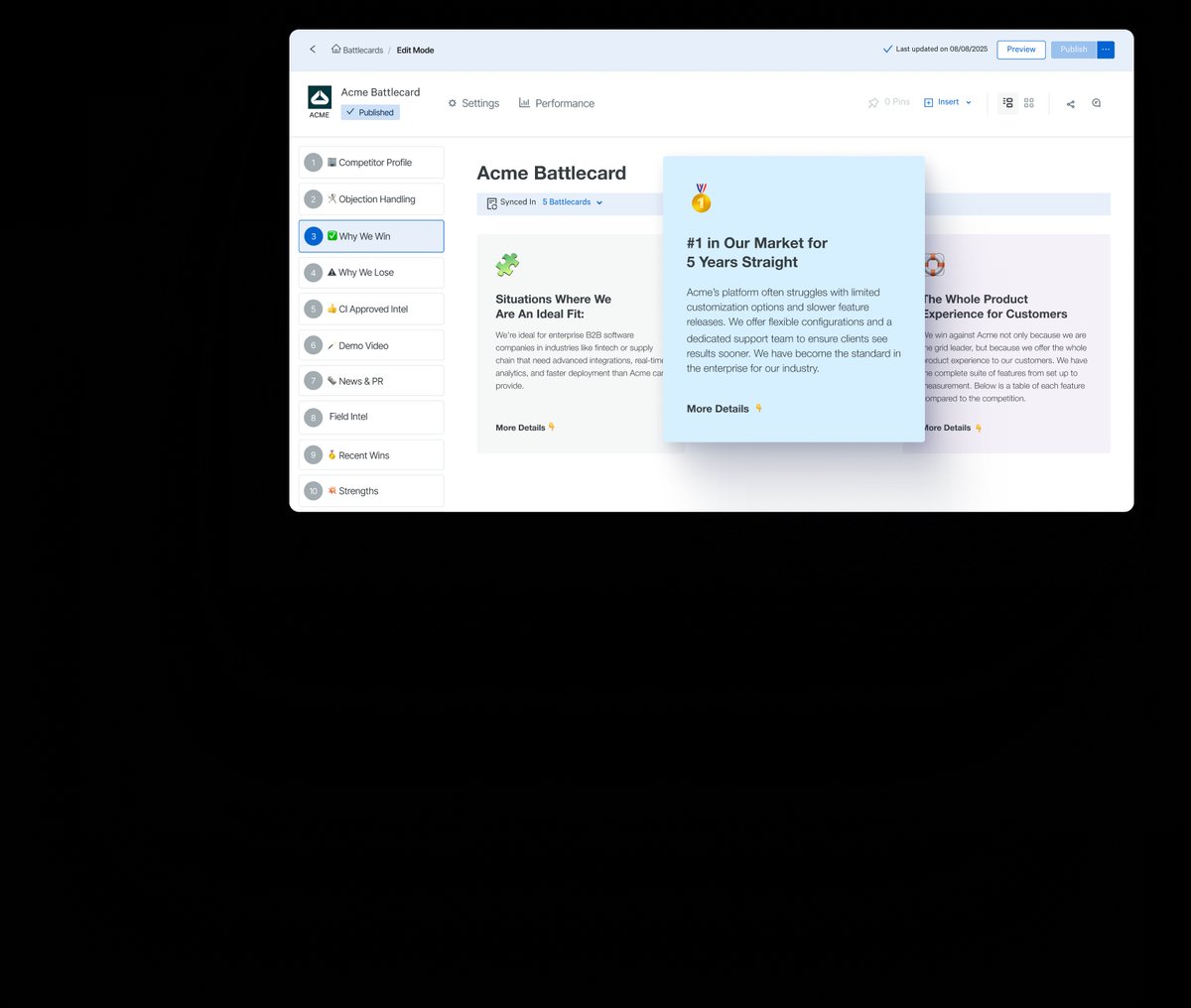
What sets Crayon apart from generic monitoring tools is its breadth of sources. It doesn't just watch competitor websites. It tracks G2 reviews, patent filings, SEC documents, job postings (which reveal strategic direction), and social media. The AI summarizes changes into digestible intelligence briefs.
According to Crayon's own research, 94% of businesses increased their CI investment in 2024. The companies that invested saw measurably higher win rates against tracked competitors.
- Purpose-built for CI (not a bolt-on feature)
- Monitors 100+ source types automatically
- AI-powered summarization and battlecard creation
- Integrates with Salesforce, HubSpot, Slack, and Highspot
- Expensive for what is primarily monitoring + organization
- Requires a dedicated person to curate and maintain intelligence
- Value depends on how actively reps use the battlecards
- No self-serve trial
Best for: Companies with a dedicated competitive intelligence or product marketing function tracking 5+ competitors.
Klue
💰 Pricing: Custom pricing only. Not publicly disclosed. Expect enterprise-level pricing based on users and features.
Klue combines CI collection with sales battlecard delivery and win/loss analysis. The platform gathers competitor signals from across the web, packages them into battlecards that live inside your sales workflow, and tracks which intelligence actually helps reps win deals.
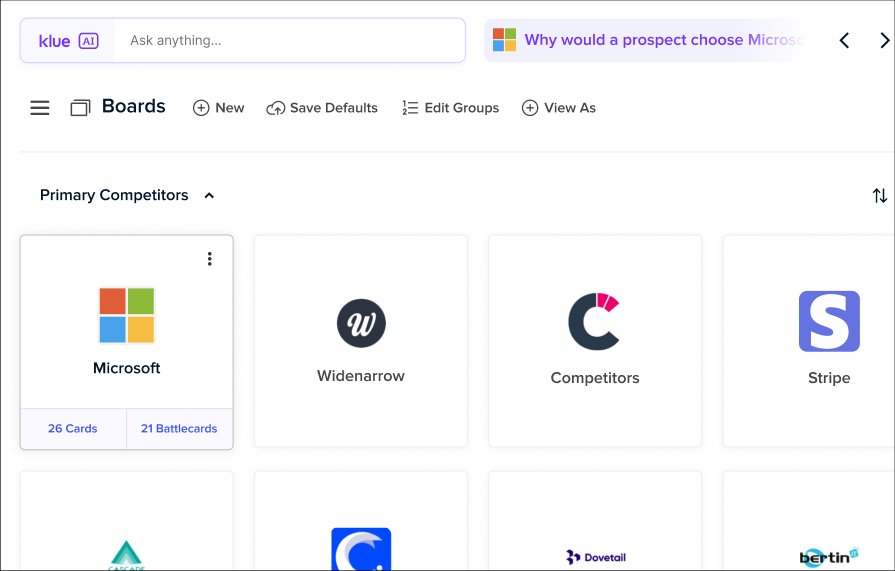
Klue's 2025 acquisition of Ignition significantly strengthened their win/loss analysis capabilities. You can now run structured win/loss programs that tie directly to competitive intelligence, showing you exactly why deals were won or lost against specific competitors.
- Best-in-class battlecard creation and distribution
- Win/loss analysis integrated into the CI workflow
- AI-powered signal collection and summarization
- Unlimited users at no extra per-seat cost
- Strong Salesforce integration
- Pricing not transparent
- Better suited for organizations with existing CI programs
- Requires product marketing investment to maintain content
- Smaller monitoring source base than Crayon
Best for: Mid-market and enterprise sales organizations that need battlecards in the hands of reps and want to measure CI's impact on win rates.
6sense
💰 Pricing: Custom pricing, typically $50,000 to $130,000 per year. Limited free tier with 50 prospecting credits.
6sense approaches market intelligence through the lens of buyer intent. Rather than just tracking what competitors do, it shows you what the market is doing: which accounts are researching your category, which competitors they're evaluating, and where they are in the buying journey.
For market intelligence, 6sense is unmatched in showing you the demand landscape. You can see how many accounts in your target market are currently in-market, which keywords they're researching, and how that compares to last quarter. This is market intelligence that directly drives revenue.
- Best-in-class buyer intent data
- Shows market demand signals in real time
- Predictive analytics for account scoring
- Reveals which competitors accounts are evaluating
- Deep CRM and MAP integrations
- Expensive, with minimum annual commitments
- Complex implementation (2-3 months typical)
- Intent data accuracy varies by industry vertical
- Requires dedicated RevOps to get full value
Best for: Enterprise B2B companies with $50K+ budgets that want to understand market demand patterns and prioritize accounts based on buying signals. Read more about intent data in our competitive intelligence tools guide.
ZoomInfo
💰 Pricing: Annual contracts starting around $15,000/year. Enterprise packages run $25,000-60,000+ depending on features, seats, and credits.
ZoomInfo is the largest B2B data platform, and its market intelligence capabilities go well beyond basic contact data. The platform provides company firmographics, buyer intent signals (Scoops), org charts, technographic data, and news tracking across millions of companies.
For market intelligence, ZoomInfo's strength is breadth. Need to size a new market segment? Map the competitive landscape? Identify which companies in a vertical are growing? ZoomInfo has the data.
- Largest B2B database with strong data accuracy
- Real-time buying signals (Scoops) for market movement
- Detailed org charts for strategic account mapping
- Intent data integration for market demand tracking
- Strong ecosystem of integrations
- Expensive with aggressive annual contracts
- Renewal price increases are a common complaint
- Credit-based limitations on exports and lookups
- Overkill for teams that only need basic market data
Best for: Enterprise teams that need a single platform for both market intelligence and sales execution. See the full ZoomInfo alternatives breakdown for comparison.
AlphaSense
💰 Pricing: Starts around $10,000/year for basic plans. Enterprise pricing for full platform access with expert call transcripts and broker research.
AlphaSense targets a different market intelligence use case: deep research across financial filings, earnings transcripts, broker reports, news, and expert interviews. It uses AI to search across thousands of premium content sources that Google can't access.
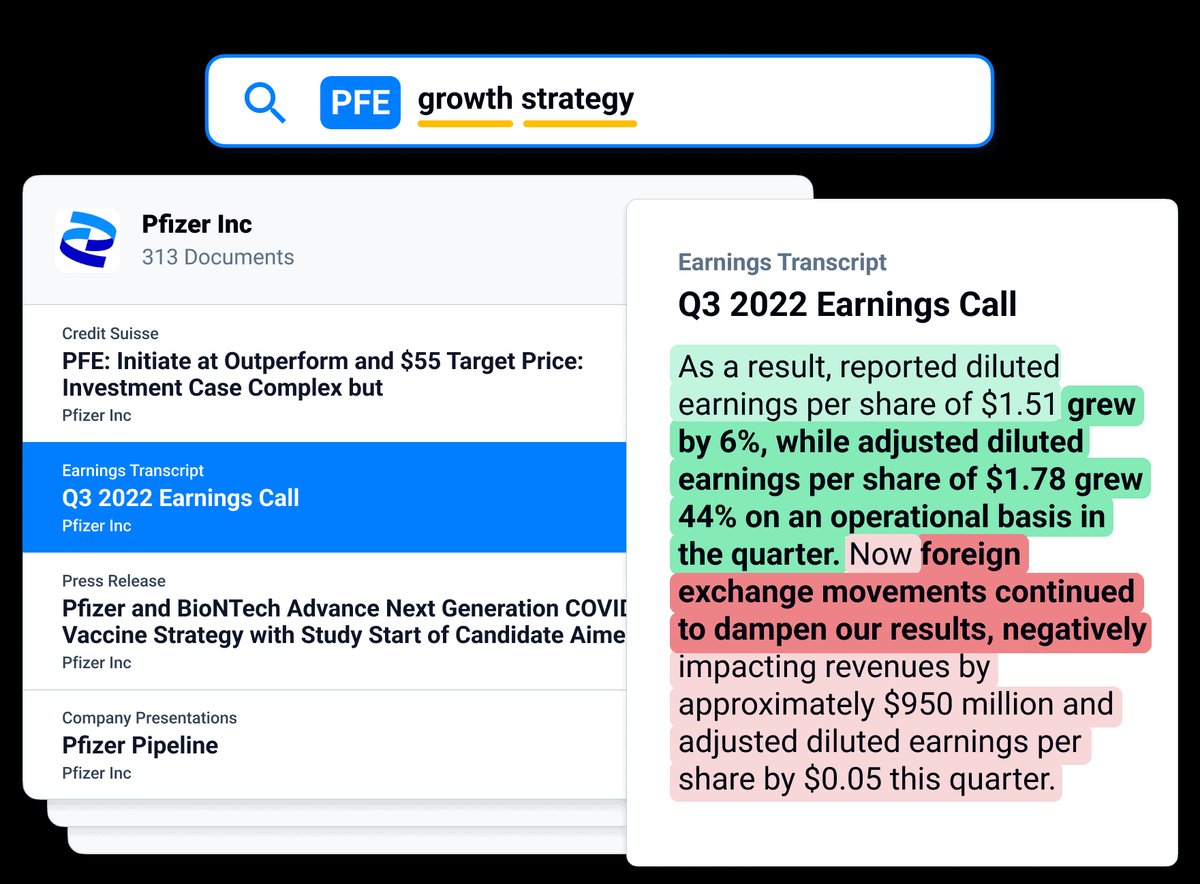
For teams that need to understand market dynamics at a strategic level, things like industry trends from 10-K filings, analyst perspectives on market shifts, and expert insights from primary research, AlphaSense delivers depth that competitor tracking tools can't match.
- Unmatched depth on financial and analyst content
- AI search across SEC filings, earnings calls, and broker research
- Expert interview transcripts (via Stream acquisition)
- Excellent for strategic planning and investor research
- Not built for sales team enablement
- Expensive for tactical CI use cases
- Better for strategy teams than frontline sales
- Limited competitive monitoring features
Best for: Strategy, finance, and corporate development teams that need deep market research beyond what sales-focused CI tools provide.
Clay
💰 Pricing: Free plan to test. Starter at $149/month. Explorer at $349/month. Pro at $800/month. All credit-based.
Clay takes a fundamentally different approach to market intelligence. Instead of providing a fixed set of features, it gives you a platform to build any intelligence workflow you can imagine by connecting 100+ data providers in a spreadsheet-like interface.
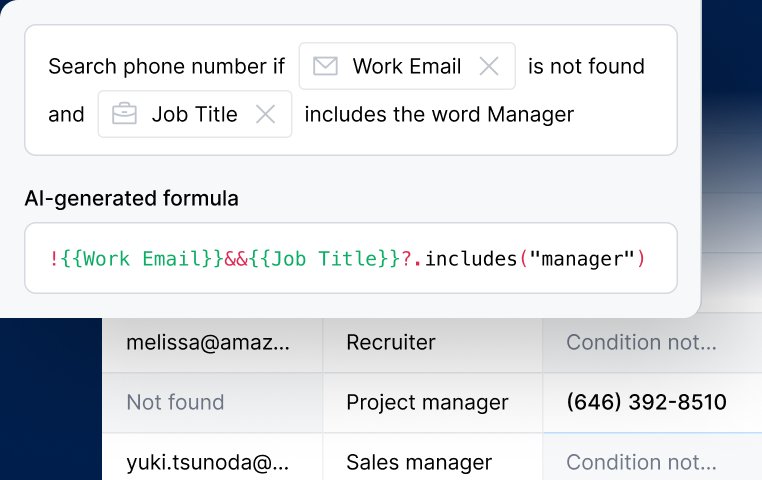
Want to track when competitors post new jobs? Clay can do that. Monitor when target accounts adopt new technology? That too. Build a market sizing model from real company data? Yes. The flexibility is what makes Clay a market intelligence tool, even though it's not marketed as one.
Watch: Building intelligence workflows in Clay for sales and market research
- Connect 100+ data sources in one workflow
- Build any intelligence workflow imaginable
- AI research agent (Claygent) for custom research
- Far more affordable than dedicated CI platforms
- Waterfall enrichment for maximum data coverage
- Requires building workflows (not plug-and-play CI)
- Learning curve for complex automations
- No built-in battlecard or distribution features
- Credits can add up on large-scale monitoring
Best for: GTM teams that want flexible, affordable market intelligence without paying for a dedicated CI platform. Learn Clay from scratch with the Clay tutorial or go deep with the Clay guide.
Similarweb
💰 Pricing: Free tier with limited data. Starter at $149/month. Professional and enterprise plans with custom pricing.
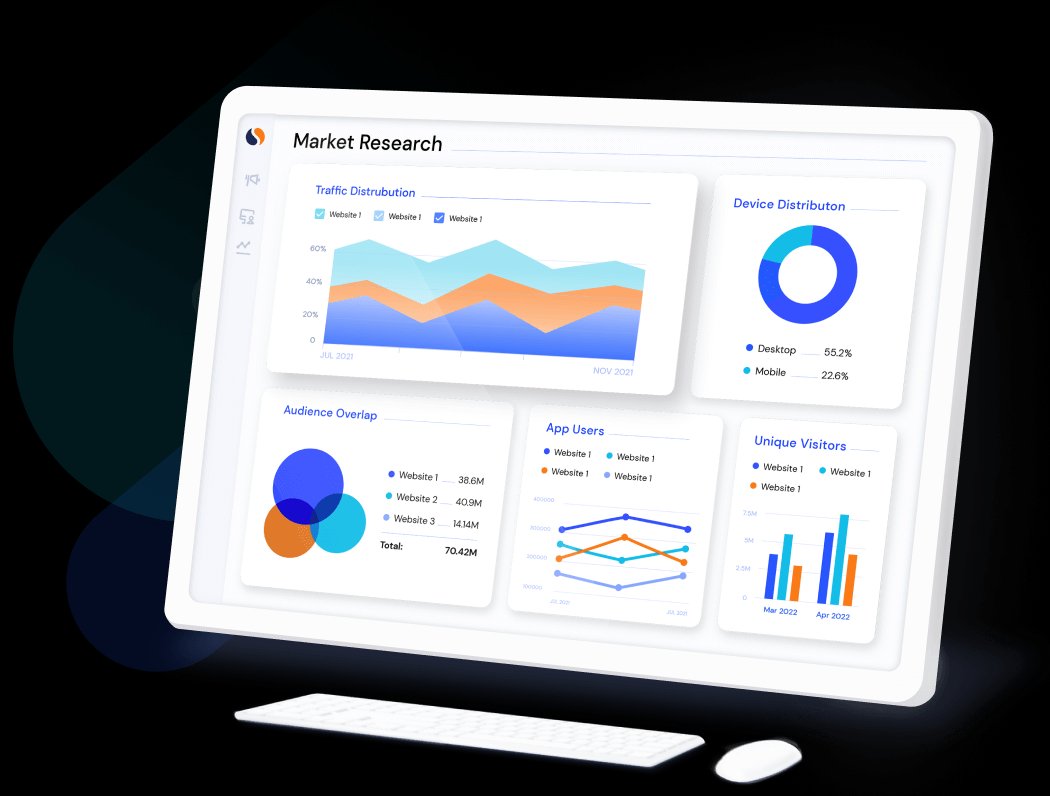
Similarweb provides market intelligence through the lens of digital performance. It estimates website traffic, audience demographics, traffic sources, and engagement metrics for any website. For understanding market share in digital channels, competitive positioning online, and industry benchmarking, it's a go-to tool.
- Detailed website traffic and engagement estimates
- Industry benchmarking and market share data
- Traffic source analysis (organic, paid, social, referral)
- App intelligence for mobile market analysis
- Free tier for basic research
- Traffic estimates can be off by 20-40% for smaller sites
- Premium plans get expensive quickly
- Limited B2B-specific intelligence
- Better for digital marketers than sales teams
Best for: Marketing teams that need to understand competitive positioning in digital channels and benchmark their performance against industry averages.
Semrush
💰 Pricing: Pro at $139/month. Guru at $249/month. Business at $499/month. Annual billing available.
Semrush is primarily an SEO and content marketing platform, but its competitive analysis features make it a legitimate market intelligence tool for understanding how competitors position themselves online.
Track competitor keyword rankings, analyze their content strategy, monitor their paid advertising, and identify content gaps in your market. For companies where online visibility is a competitive battleground, Semrush provides actionable market intelligence.
- Deep SEO competitive analysis
- Content gap identification
- Paid advertising intelligence
- Backlink analysis and domain comparison
- Large keyword database
- Limited to online/content intelligence
- Not built for sales team enablement
- Doesn't track product, pricing, or hiring changes
- Best paired with a broader CI tool
Best for: Marketing teams that need to understand competitive positioning in search, content, and digital advertising.
Gong
💰 Pricing: Approximately $1,600/user/year plus a platform fee of $5,000-50,000 annually. Implementation adds $15,000-65,000.
Gong provides a unique form of market intelligence that no external data source can replicate: intelligence from your own sales conversations. Every call, demo, and meeting is analyzed to surface competitor mentions, market objections, feature requests, and buying patterns.
When 200 prospects mention the same competitor in the same quarter, that's a market signal. When objections about your pricing spike 40% quarter-over-quarter, that's market intelligence. Gong surfaces these patterns automatically.
- Surfaces competitive mentions from real buyer conversations
- Tracks market trends through conversation pattern analysis
- Shows how top reps handle competitive objections
- Integrates with CRM for pipeline-level market insights
- Expensive with platform fees and implementation costs
- Requires significant call volume for meaningful data
- Only captures intelligence from your own conversations
- Privacy/recording consent varies by region
Best for: Sales organizations with 10+ reps that want to understand market dynamics from the buyer's perspective. See the full sales tools guide for how Gong fits into a modern stack.
Kompyte (by Semrush)
💰 Pricing: Custom pricing through Semrush enterprise sales. Previously offered plans starting around $400/month.
Kompyte was acquired by Semrush and now offers automated competitive intelligence with a marketing focus. It monitors competitor websites, social media, advertising, SEO changes, and content updates, then delivers insights through automated reports and AI summaries.
- Automated monitoring across digital channels
- AI-powered competitor activity summaries
- Integration with Semrush's SEO and content data
- Battlecard functionality for sales teams
- Now bundled with Semrush, pricing less transparent
- Smaller market presence than Crayon or Klue
- Marketing-focused, less depth on sales enablement
- Limited coverage of non-digital competitive signals
Best for: Semrush users who want to add competitive intelligence to their existing marketing analytics stack.
Apollo
💰 Pricing: Free plan with limited credits. Basic at $49/user/month. Professional at $79/user/month.
Apollo provides market intelligence through its massive database of 275M+ contacts and company records. While it's primarily a sales engagement platform, its filtering capabilities make it a powerful tool for market sizing, competitive account mapping, and identifying market segments.
Filter by industry, company size, technology usage, location, and growth signals to build a picture of any market segment. Track when companies in your target market are hiring, expanding, or adopting new technology.
- 275M+ contacts for market mapping
- Technographic and firmographic filters
- Job change tracking for market movement
- Strong free tier for initial research
- Built-in outreach for acting on insights
- Data quality inconsistent outside North America
- Not a dedicated market intelligence tool
- Credit limits restrict large-scale analysis
- No automated competitor monitoring
Best for: Sales teams that need affordable market intelligence combined with prospecting capabilities. Compare it with Clay in the Clay vs Apollo analysis.
Revenue Finder: Best Free Tool for Competitor Revenue Data
💰 Pricing: Completely free. No account needed.
Revenue Finder is a free tool on hansdekker.ai that provides instant revenue estimates for any company. When you need quick market intelligence about a competitor's scale, a prospect's budget potential, or a market segment's revenue distribution, it delivers in seconds without any signup.
For market intelligence, revenue data is foundational. It helps you size competitors, qualify opportunities, and understand market dynamics. Pair it with Employee Finder for headcount data to get a fuller picture.
Watch: How to research competitors and markets at scale for sales intelligence
- Free with no strings attached
- Instant revenue estimates for any company
- No signup, no credit card, no credits
- Useful for quick competitor sizing
- Estimates only, not verified financial data
- Limited to revenue (not a full MI platform)
- Best for private companies without public financials
Best for: Anyone who needs a quick revenue estimate for market intelligence research.
How to Choose Market Intelligence Software
The right tool depends on three factors: your use case, your team, and your budget.
By Use Case
"I need to track competitor moves" → Crayon or Klue. These are purpose-built for monitoring competitor activity, creating battlecards, and distributing intel to sales teams.
"I need to understand market demand" → 6sense or ZoomInfo. Intent data shows you where the market is heading and which accounts are in-market.
"I need flexible market research" → Clay. Build any intelligence workflow from 100+ data sources. Most affordable option for custom research.
"I need deep financial and strategic research" → AlphaSense. Access to SEC filings, analyst reports, and expert interviews for strategic decision-making.
"I need digital competitive analysis" → Similarweb + Semrush. Understand online market share, content positioning, and digital advertising strategies.
By Budget
Free: Start with Apollo (free tier), Revenue Finder, Employee Finder, and hansdekker.ai's free AI skills like Competitor Intel and Industry Brief.
$200-500/month: Clay ($149/mo) + Semrush ($139/mo) covers custom research workflows plus digital competitive analysis.
$1,000-3,000/month: Add Gong for conversation intelligence or Similarweb for deeper digital market analysis.
$15,000+/year: Dedicated CI platforms (Crayon, Klue) or enterprise data platforms (ZoomInfo, 6sense).
By Team
Solo founder / small team: Clay + Apollo free + hansdekker.ai tools. Build custom workflows, don't pay for enterprise platforms.
Mid-market sales team (10-50 reps): Klue or Crayon for CI + Gong for conversation intel + Clay for research workflows.
Enterprise organization: Full stack. 6sense or ZoomInfo for data, Klue for battlecards, Gong for conversation analysis, AlphaSense for strategic research.
Building a Market Intelligence Program
Buying software isn't enough. The tools only work if you build a program around them.
Step 1: Define your intelligence requirements. What questions do your sales, marketing, and product teams need answered? Common ones: What are competitors launching? Where are they hiring? What do buyers say about us vs them? Where is demand growing?
Step 2: Assign ownership. Someone needs to own competitive intelligence. In most organizations, this sits in product marketing. Without an owner, the tools collect dust.
Step 3: Build distribution workflows. Intelligence locked in a platform is useless. Build Slack channels, email digests, CRM battlecards, and deal-level alerts that push intelligence to the people who need it.
Step 4: Measure impact. Track competitive win rate, rep confidence in competitive deals, and time-to-insight for strategic decisions. If these metrics aren't improving, your program needs adjustment.
For a complete framework on building your sales technology stack, including where market intelligence fits, read the GTM stack guide and the AI-powered GTM guide.
Free AI Skills for Market Intelligence
Start gathering market intelligence right now with these free AI skills:
- Competitor Intel — Comprehensive competitive analysis of any company
- Industry Brief — Instant industry overview with key players and trends
- Prospect Research — Deep-dive research on any company
- Tech Stack Analyzer — See what technology any company uses
- Trigger Event Finder — Find buying signals and market triggers
- GTM Playbook — Build a go-to-market playbook with competitive positioning
- Annual Report Analyzer — Extract intelligence from public financial filings
- News Digest — Get a curated digest of industry and competitor news
Start with Competitor Intel on your top 3 competitors, then run an Industry Brief on your market to understand the broader landscape.
Frequently Asked Questions
What is market intelligence software?
Market intelligence software is a category of tools that help businesses collect, analyze, and act on information about their market. This includes competitive tracking (monitoring competitor activity), buyer intent analysis (understanding demand signals), market research (sizing and segmenting markets), and sales enablement (delivering intelligence to revenue teams). The category spans dedicated CI platforms like Crayon and Klue, data platforms like ZoomInfo and 6sense, and flexible tools like Clay.
How much does market intelligence software cost?
Free options exist: Apollo's free tier, Revenue Finder, and Similarweb's free plan. Mid-range tools like Clay ($149/mo) and Semrush ($139/mo) provide solid market intelligence for $200-500/month. Dedicated CI platforms like Crayon start around $15,000/year. Enterprise platforms like 6sense typically run $50,000-130,000/year.
What is the difference between market intelligence and competitive intelligence?
Market intelligence is the broader category. It covers all information about your market: customer behavior, industry trends, regulatory changes, demand patterns, and competitive dynamics. Competitive intelligence is a subset focused specifically on your competitors: their products, pricing, strategy, hiring, and market positioning. Most modern tools blend both.
Can AI replace market intelligence software?
AI enhances market intelligence tools but doesn't replace them. AI excels at summarizing large volumes of competitor data, identifying patterns across signals, and generating research reports. Tools like Clay use AI agents to research companies at scale. However, the underlying data collection, intent signals, and conversation intelligence still require specialized platforms. The trend is AI layered on top of market intelligence tools, not replacing them.
What market intelligence tools do sales teams actually use?
Based on industry usage data, the most commonly adopted tools for sales teams are ZoomInfo for company data, Gong for conversation intelligence, 6sense for intent data, and Apollo for prospecting with market context. Dedicated CI platforms like Crayon and Klue are more common in organizations with product marketing teams that own competitive intelligence.
How do I measure the ROI of market intelligence software?
Track four metrics: competitive win rate (should improve as reps get better intel), time-to-insight (how fast can you answer strategic market questions), rep usage (are people actually consuming the intelligence), and deal cycle compression (deals should close faster when reps can preempt competitive objections). Klue reports that companies with mature CI programs see 15-30% improvements in competitive win rates.
Ready to build the GTM workflows that turn market intelligence into revenue? The Clay MBA course teaches you how to build automated research, enrichment, and outbound systems using Clay and the modern sales stack.
Want to master Clay?
6+ hours of structured training
ClayMBA is my comprehensive course on becoming a top GTM engineer. Learn everything from basics to advanced workflows.
Explore ClayMBAWant to master Clay?
6+ hours of structured training
ClayMBA is my comprehensive course on becoming a top GTM engineer. Learn everything from basics to advanced workflows.
Explore ClayMBA