Best Competitive Intelligence Tools for Sales Teams (2026)

Best Competitive Intelligence Tools for Sales Teams (2026)
Your prospect just told you they're also evaluating two of your competitors. Do you know what those competitors launched last month? What their pricing looks like? What customers complain about on G2?
TL;DR: The best competitive intelligence tools for sales in 2026 are Crayon and Klue for dedicated CI, Gong for conversation intelligence, and Clay for building custom research workflows. For a free starting point, use Revenue Finder to estimate competitor revenue. Most teams need 2-3 tools: one for automated tracking, one for deal-level intel, and one for data enrichment.
If you're guessing, you're losing deals.
Competitive intelligence (CI) for sales is the practice of systematically gathering, analyzing, and acting on information about your competitors. It goes beyond knowing their product features. It means understanding their pricing moves, hiring patterns, customer sentiment, and go-to-market strategy so your reps can position against them in real conversations.
According to Crayon's 2024 State of Competitive Intelligence report, 94% of businesses say they've increased investment in CI programs. The reason is simple: teams that arm reps with competitive insights win more deals. In fact, companies with dedicated CI programs report win rates 30% higher than those without.
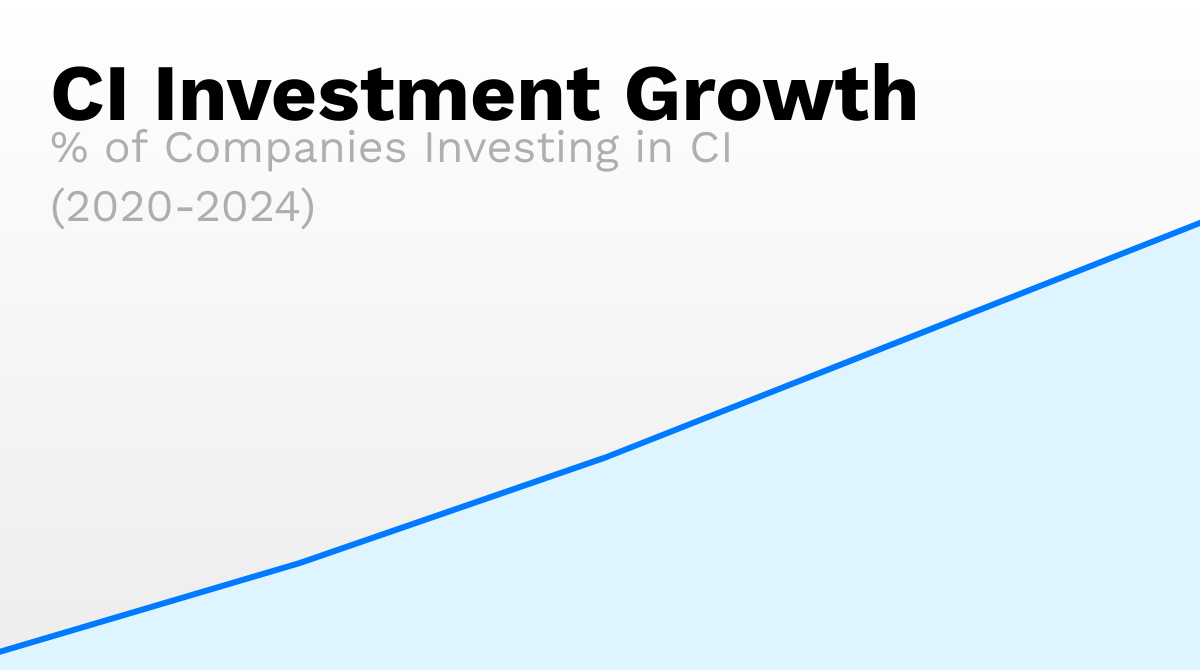
Source: Crayon State of Competitive Intelligence Reports (2020-2024)
This guide covers the best competitive intelligence tools available to sales teams right now, with real pricing, honest pros and cons, and practical advice on building a CI stack that actually gets used.
Quick Comparison: Top Competitive Intelligence Tools
| Tool | Best For | Starting Price |
|---|---|---|
| Clay | Competitive research workflows | Free / $149/mo |
| 6sense | Buyer intent + competitive intel | ~$50K/year |
| Gong | Conversation intelligence | ~$1,600/user/year + platform fee |
| Clearbit (Breeze Intelligence) | Company data enrichment | $75/mo (HubSpot required) |
| Apollo | Prospecting + competitive data | Free / $49/user/mo |
| Cognism | B2B contact data (EMEA focus) | ~$74/mo (Essentials) |
| ZoomInfo | Market intelligence at scale | ~$15K/year |
| Crayon | Dedicated CI tracking | ~$15K/year |
| Klue | Battlecards + win/loss analysis | Custom pricing |
| Revenue Finder | Free competitor revenue estimates | Free |
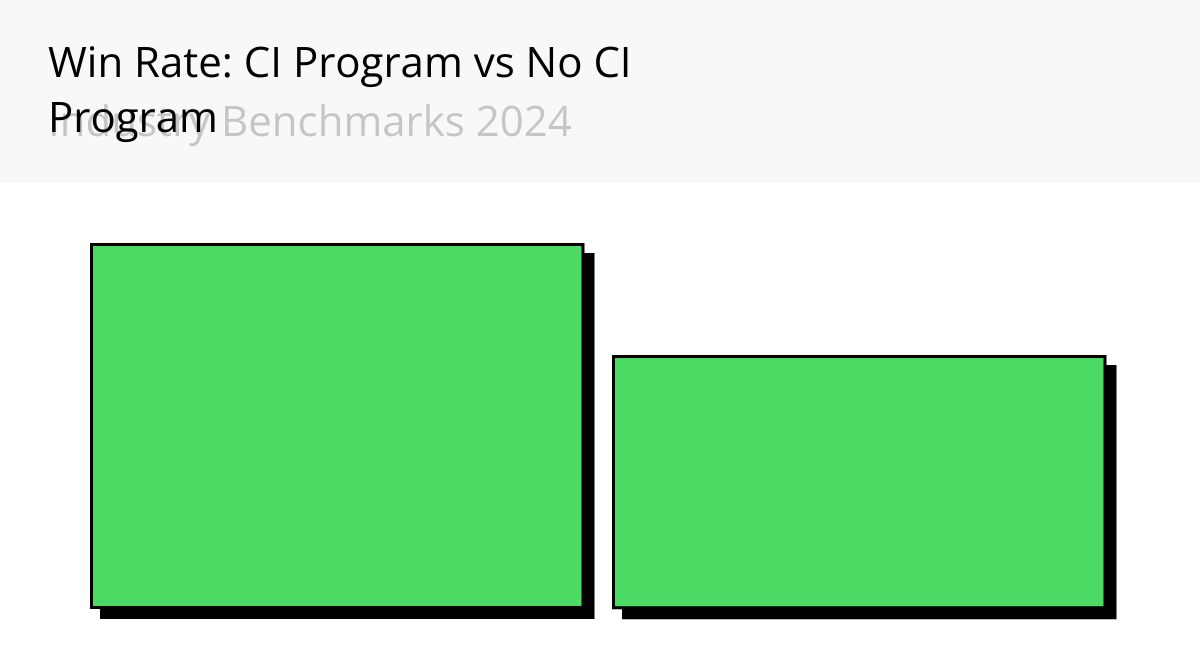
Companies with dedicated CI programs see significantly higher win rates (65% vs 45%).
The 10 Best Sales Competitive Analysis Tools
Clay
💰 Pricing: Free plan available. Starter at $149/month ($134/mo billed annually). Explorer at $349/mo. Pro at $800/mo. All plans use a credit-based system.
Clay isn't a traditional CI tool. It's a data orchestration platform that lets you build automated competitive research workflows by pulling from 100+ data providers in a single table. That flexibility is what makes it powerful for CI.
You can set up Clay tables that automatically monitor competitor job postings, track leadership changes, pull technographic data, and enrich prospect records with competitive context. Need to know which of your prospects use a competitor's product? Clay can find that signal and route it to your CRM.
- Connects 100+ data sources in one workflow
- Highly customizable for any CI use case
- Credit-based pricing means you pay for what you use
- Powerful AI agent (Claygent) for web research tasks
- Learning curve for building complex workflows
- Credits can add up on large-scale research
- Not a plug-and-play CI dashboard
Best for: GTM teams that want to build custom competitive intelligence workflows rather than rely on a one-size-fits-all tool. If you want to go deep with Clay, check out the complete Clay tutorial and the AI-powered GTM guide.
6sense
💰 Pricing: Custom pricing, typically $50,000 to $130,000 per year depending on features and scale. There is a limited free tier with 50 credits for basic prospecting.
6sense combines account-based marketing with buyer intent data, making it one of the most powerful platforms for understanding when prospects are actively researching your competitors.
The platform tracks anonymous buying signals across the web, showing you which accounts are researching competitor keywords, visiting competitor websites, and engaging with competitive content. For sales teams, this means you can prioritize outreach to accounts that are in-market and considering alternatives.
- Best-in-class intent data for competitive monitoring
- Shows which accounts are researching competitors in real time
- Predictive analytics for deal scoring
- Deep CRM and MAP integrations
- Expensive, especially for smaller teams
- Complex implementation (plan for 2-3 months)
- Intent data accuracy varies by industry
Best for: Enterprise and mid-market B2B companies with dedicated revenue operations teams and the budget to invest in predictive intelligence.
Gong
💰 Pricing: Approximately $1,600 per user per year, plus a platform fee ranging from $5,000 to $50,000 annually depending on team size. Implementation can add $15,000 to $65,000. All pricing is negotiated through sales.
Gong takes a unique approach to competitive intelligence by mining your own sales conversations. Every call, demo, and meeting gets recorded, transcribed, and analyzed. Gong then surfaces when competitors are mentioned, what objections come up, and how top reps handle competitive situations.
This is intelligence you can't get from any external data source. It comes directly from what your buyers are saying about the competition.
- Surfaces competitive mentions from real buyer conversations
- Shows how top reps handle competitor objections
- Tracks competitor mention trends over time
- Integrates with CRM for pipeline-level insights
- Expensive when you factor in platform fees and implementation
- Requires significant call volume to generate meaningful insights
- Privacy/recording consent varies by region
Best for: Sales teams with 10+ reps who want to understand competitive dynamics directly from buyer conversations. Learn more in our sales tools guide.
Clearbit (Breeze Intelligence)
💰 Pricing: Requires a HubSpot subscription (minimum $30/month) plus Breeze Intelligence credit packs starting at $45/month billed annually. Previous free Clearbit tools were shut down in April 2025.
Clearbit, now rebranded as Breeze Intelligence after HubSpot's acquisition, provides company and contact data enrichment that's valuable for competitive research. It can tell you a company's tech stack, employee count, funding status, and industry classification.
For CI specifically, Clearbit helps you understand the technographic profile of your target accounts, which means you can see which competitors' tools prospects currently use and tailor your pitch accordingly.
- Deep company data including tech stack detection
- Native HubSpot integration is seamless
- Real-time enrichment on form fills and website visits
- Good data accuracy for North American companies
- Now requires HubSpot (not standalone anymore)
- Previous free tools have been discontinued
- Credit costs can escalate with high-volume enrichment
Best for: HubSpot users who want to enrich their CRM data with competitive and firmographic intelligence without leaving their existing stack.
Apollo
💰 Pricing: Free plan with limited credits. Basic at $49/user/month. Professional at $79/user/month. Organization at $149/user/month (minimum 3 users). Annual billing available.
Apollo is primarily a sales engagement platform, but its massive database of 275M+ contacts and company records makes it a solid source for competitive intelligence. You can filter by technographics to find companies using competitor products, track job changes at competitor accounts, and build targeted lists based on competitive signals.
- 275M+ contact database with solid accuracy
- Technographic filters for competitor product usage
- Built-in email sequences and dialer
- Strong free tier for small teams
- Data quality can be inconsistent outside North America
- CI features are secondary to prospecting
- Email credits run out fast on free/basic plans
Best for: Sales teams that need a combined prospecting and competitive research tool at an accessible price point. See how it stacks up in our Clay vs Apollo comparison.
Cognism
💰 Pricing: Essentials plan from approximately $74/month billed annually (2,040 credits/year). Team and enterprise plans range from $1,500 to $25,000+ annually depending on users and features. Diamond plan with phone-verified numbers costs more.
Cognism stands out for its strong European data coverage and phone-verified mobile numbers. For competitive intelligence, Cognism helps you identify decision-makers at competitor accounts, track company news and changes, and build targeted prospect lists in markets where other tools fall short.
- Best-in-class EMEA data coverage
- Phone-verified mobile numbers (Diamond plan)
- GDPR-compliant data practices
- Intent data partnerships (Bombora)
- North American data isn't as strong as ZoomInfo or Apollo
- Pricing not transparent; requires sales conversation
- Credit system can be limiting for heavy research
Best for: Sales teams targeting European and international markets where other data providers have gaps.
ZoomInfo
💰 Pricing: Annual contracts starting around $15,000/year for the base platform. Per-seat fees and credit charges are additional. No monthly plans available. Enterprise deals typically run $25,000 to $60,000+ annually.
ZoomInfo is the heavyweight of B2B data platforms. For competitive intelligence, its combination of company data, buyer intent signals, and org chart mapping gives enterprise sales teams a comprehensive view of their competitive landscape.
ZoomInfo's Scoops feature surfaces real-time buying signals like budget approvals and project initiations. Combined with their intent data, you can identify accounts that are actively evaluating solutions in your category.
- Largest B2B database with strong accuracy
- Real-time intent data and buying signals (Scoops)
- Detailed org charts for account mapping
- Strong integrations with every major CRM and sales tool
- Expensive, with aggressive annual contracts
- Renewal price increases are common (per public user feedback)
- Data exports and credits add hidden costs
- Overkill for small teams
Best for: Enterprise sales teams with significant budgets that need the most comprehensive B2B data available. If budget is a concern, check out our ZoomInfo alternatives guide.
How AI Enhances Competitive Intelligence Research
Watch: How to Analyze 10K Reports at Scale - extract competitive intelligence from public filings
Crayon: Best Dedicated Competitive Intelligence Platform
💰 Pricing: Starts at approximately $15,000/year according to HubSpot marketplace listings. Custom pricing based on the number of competitors tracked and users. No public pricing page.
Crayon is purpose-built for competitive intelligence. It automatically tracks competitor websites, pricing pages, product updates, job postings, news mentions, and reviews. The platform then organizes these signals into digestible intelligence briefs and battlecards that sales teams can actually use.
Unlike the other tools on this list that do CI as a secondary function, Crayon's entire product is built around tracking and analyzing competitor moves.
- Purpose-built for competitive intelligence (not an add-on)
- Automated tracking of competitor websites, pricing, and content
- AI-powered analysis and battlecard creation
- Integrates with Salesforce, Slack, and other sales tools
- Expensive for what is essentially monitoring + organization
- Requires someone to curate and maintain the intelligence
- Value depends heavily on how actively sales uses the battlecards
Best for: Companies with a dedicated competitive intelligence or product marketing function that needs a centralized platform for tracking multiple competitors.
Klue
💰 Pricing: Custom pricing only. Not publicly disclosed. Based on user reports and industry sources, expect enterprise-level pricing. Contact Klue's sales team for a quote.
Klue combines competitive intelligence gathering with battlecard delivery and win/loss analysis. Its AI collects competitor signals from across the web, but the real value is in how it packages that intelligence into ready-to-use battlecards that live inside your sales workflow.
Klue also offers robust win/loss analysis features (boosted by their 2025 acquisition of Ignition), helping you understand why deals were won or lost against specific competitors.
- Excellent battlecard creation and distribution
- Win/loss analysis integrated into the CI workflow
- AI-powered signal collection and summarization
- Unlimited users at no extra cost (per Klue's website)
- Pricing is not transparent
- Better suited for larger organizations with existing CI programs
- Requires buy-in from product marketing to maintain
Best for: Mid-market and enterprise companies that need both competitive intelligence collection and a system for delivering battlecards to reps at the point of sale.
Revenue Finder: Best Free Tool for Competitor Revenue Estimates
💰 Pricing: Completely free. No account required.
Revenue Finder is a free tool on hansdekker.ai that estimates company revenue based on publicly available signals. When you're researching a competitor or a prospect, knowing their approximate revenue helps you gauge their scale, market position, and potential budget.
It's not a full CI platform, but it fills a specific gap that most paid tools overlook: quick, free revenue estimation without signing up for anything.
Watch: How to use Claude Projects to streamline your competitive research workflow
- Free with no strings attached
- Quick revenue estimates for any company
- Useful for qualifying prospects and sizing up competitors
- No signup or credit card needed
- Estimates only (not verified financial data)
- Limited to revenue, doesn't cover other CI data points
- Best for private companies where revenue isn't publicly reported
Best for: Sales reps who need a quick revenue estimate for a competitor or prospect during deal research.
How to Build a Competitive Intelligence Stack
You don't need all ten of these tools. Most sales teams need three to four tools working together to cover the full CI workflow: collect, analyze, distribute, and act.
Here's a practical framework:
1. Collection Layer: Where intelligence comes from
Pick one or two tools that gather raw competitive data. This could be Clay for custom research workflows, Crayon or Klue for automated competitor monitoring, or 6sense for intent signals.
2. Enrichment Layer: Making data actionable
Apollo or ZoomInfo can enrich your accounts with firmographic and technographic data. Clearbit works well here if you're on HubSpot. Use Revenue Finder for quick revenue estimates.
3. Analysis Layer: Understanding what it means
Gong gives you the buyer perspective by analyzing what competitors come up in your sales conversations. Combined with win/loss data from Klue, you get a complete picture of your competitive position.
4. Distribution Layer: Getting intel to reps
The best intelligence is worthless if reps don't use it. Battlecard tools like Klue and Crayon push insights into Salesforce and Slack. Clay can automate alerts when competitive signals appear on target accounts.
Budget Recommendations
Startups and small teams (under $500/month): Start with Apollo (free or Basic plan) for prospecting data, Clay (Starter plan) for research workflows, and Revenue Finder for revenue estimates. Total: under $200/month.
Mid-market teams ($500 to $5,000/month): Add Gong for conversation intelligence and either Crayon or Klue for dedicated CI tracking. Layer in Cognism if you sell into EMEA.
Enterprise teams ($5,000+/month): Full stack with ZoomInfo or 6sense for data and intent, Gong for conversation analysis, Klue or Crayon for battlecards, and Clay for custom automation workflows.
For a broader look at building your GTM technology stack, read our AI-powered GTM guide and the complete sales tools guide.
Try Free AI-Powered Competitive Intelligence Skills
Want to run competitive intelligence right now without buying any tools? hansdekker.ai offers free AI skills built for GTM teams:
- Competitor Intel - Get a comprehensive competitive analysis of any company
- GTM Playbook Generator - Build a complete go-to-market playbook that includes competitive positioning
- Industry Brief - Get an industry-level overview with key players and market dynamics
- Prospect Research - Deep-dive on specific accounts, including their competitive landscape
- Tech Stack Analyzer - See what technology a competitor or prospect is running
- Trigger Event Finder - Find buying signals and competitive triggers
- Value Prop Builder - Craft positioning that differentiates against specific competitors
- Objection Handler - Prepare competitive objection responses for sales calls
Start with Competitor Intel on your top 3 competitors, then use the GTM Playbook to build positioning that exploits their weaknesses.
Frequently Asked Questions
What are competitive intelligence tools?
Competitive intelligence tools are software platforms that help businesses collect, analyze, and act on information about their competitors. For sales teams specifically, these tools track competitor pricing changes, product updates, hiring patterns, customer reviews, and market positioning. They turn scattered data into actionable insights that help reps win deals.
How much do competitive intelligence tools cost?
Pricing varies dramatically. Free options like Apollo's basic plan and Revenue Finder can get you started at zero cost. Mid-range tools like Clay start at $149/month. Dedicated CI platforms like Crayon start around $15,000/year. Enterprise solutions like 6sense and ZoomInfo can run $50,000 to $130,000+ annually.
What is the difference between competitive intelligence and market intelligence?
Competitive intelligence focuses specifically on your direct and indirect competitors: their products, pricing, strategy, and market moves. Market intelligence is broader, covering industry trends, customer behavior, regulatory changes, and overall market dynamics. Most modern CI tools like 6sense and ZoomInfo blend both, giving you competitor-specific data alongside market-level insights.
Can small sales teams benefit from competitive intelligence tools?
Absolutely. You don't need an enterprise budget to start gathering competitive intelligence. Apollo has a free tier with solid prospecting data. Clay offers a free plan for building research workflows. Revenue Finder is completely free for revenue estimates. Start with these, document what you learn, and invest in dedicated CI tools as your team and deal sizes grow.
How do I measure the ROI of competitive intelligence tools?
Track three metrics: win rate against tracked competitors (should improve as reps get better intel), competitive deal cycle length (should shorten when reps can preempt objections), and rep confidence scores (survey reps quarterly on how prepared they feel in competitive deals). According to industry benchmarks, companies with mature CI programs see win rate improvements of 15-30%.
What competitive intelligence data should sales teams track?
Focus on five categories: pricing changes (including packaging and discount patterns), product launches and feature updates, leadership and hiring changes (new VP of Sales signals a strategy shift), customer reviews and sentiment (G2, Capterra, Reddit), and content and messaging shifts (website changes, new case studies, positioning updates). Tools like Crayon and Klue automate tracking across all five categories.
Want to master the tools and workflows that top GTM teams use for competitive research and outbound? The Clay MBA course teaches you how to build automated competitive intelligence workflows, from data collection to personalized outreach, using Clay and the modern sales stack.
Want to master Clay?
6+ hours of structured training
ClayMBA is my comprehensive course on becoming a top GTM engineer. Learn everything from basics to advanced workflows.
Explore ClayMBAWant to master Clay?
6+ hours of structured training
ClayMBA is my comprehensive course on becoming a top GTM engineer. Learn everything from basics to advanced workflows.
Explore ClayMBA